Learn about the purpose and features of World Belief Hub


Learn about the purpose and features of World Belief Hub

World Belief Hub is designed to provide clear and concise information about world religions and belief systems, helping you explore various beliefs and compare them easily. Purpose Introducing Religions and Beliefs: At World Belief Hub, we cover major world religions...

Shinto is the indigenous religion of Japan, focusing on the worship of kami (spirits) and rituals that celebrate harmony with nature and tradition. It has no single founder or central scripture. Key Beliefs Kami: Spiritual beings or gods that inhabit natural elements,...

Atheism is the absence of belief in deities or gods. Unlike religions that affirm the existence of one or more gods, atheism denies or lacks belief in divine beings, focusing instead on reason, evidence, and the natural world. Key Beliefs No belief in gods: Atheists...

Sikhism is a monotheistic religion founded in the 15th century in the Punjab region of India by Guru Nanak. It emphasizes equality, service, and devotion to one God. Key Beliefs Monotheism: Belief in one, formless God, referred to as Waheguru. Equality: All human...

Buddhism is a spiritual tradition founded by Siddhartha Gautama (the Buddha) around the 5th century BCE. It focuses on personal spiritual development, the search for enlightenment, and the end of suffering. Key Beliefs The Four Noble Truths: Life is suffering...
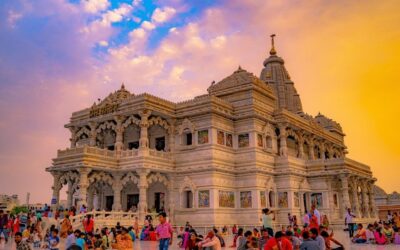
Hinduism is one of the world’s oldest religions, with no single founder. It is a complex faith that encompasses a variety of beliefs, practices, and traditions centered around concepts like dharma (duty), karma (action), and moksha (liberation). Key Beliefs Polytheism...

Judaism is one of the oldest monotheistic religions, centered on the belief in one God and the covenant between God and the Jewish people. It is the foundation for both Christianity and Islam. Key Beliefs Monotheism: Belief in one God (Yahweh), who is omniscient,...

Islam is a monotheistic religion that believes in one God (Allah) and is based on the teachings of the Prophet Muhammad. It is the second-largest religion in the world. Key Beliefs Monotheism: Belief in one God (Allah), who is all-powerful, all-knowing, and merciful....

Christianity is one of the world’s major religions, based on the teachings of Jesus Christ. It emphasizes faith in Jesus as the Son of God and Savior of humanity. Key Beliefs Monotheism: Belief in one God, who exists as the Father, Son (Jesus Christ), and Holy Spirit...
Introduction Long before the Hebrew prophets walked the hills of Canaan, the lands of the Levant were alive with myriad gods, spirits, and sacred rites. The rise of Judaism brought monotheism and strict devotion to Yahweh, yet within the texts, rituals, and cultural...
Introduction In the vast deserts of Arabia, where sand meets sky and the wind carries the whispers of ancient caravans, Islam emerged as a transformative faith. Yet even within this strict monotheism, echoes of earlier beliefs linger — reminders that spiritual...
Introduction Beneath the grand cathedrals, within the rhythm of the liturgical year, and woven into symbols we often take for granted, the whispers of older religions can still be heard. Christianity, though framed as a monotheistic faith, carries within it the echoes...
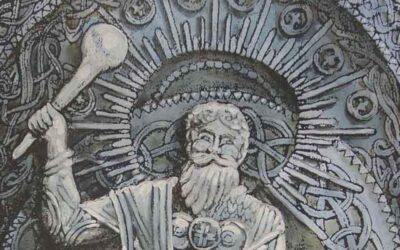
Introduction In forests thick with pine and birch, along rivers that mirror the endless sky, the Slavic gods once walked among their people. They were gods of thunder and fire, of the underworld and fertility, of wisdom and magic — deities whose presence was felt in...
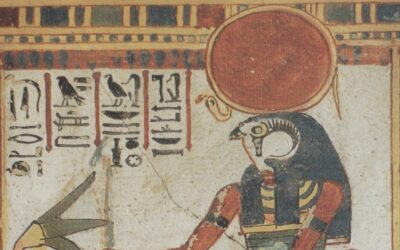
Introduction Beneath the blazing sun of the Nile, where deserts stretched to the horizon and life bloomed along the river’s banks, the Egyptian gods reigned as keepers of balance. They were gods of order and chaos, of life and death, of creation and destruction. Their...
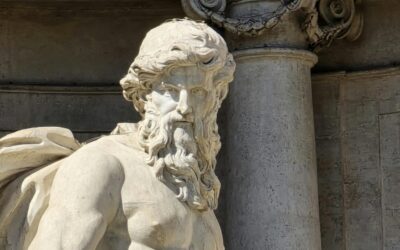
Introduction In the shadow of marble arches and beneath the roar of triumphal processions, the Roman gods once reigned as keepers of empire and order. They were gods of war and law, of hearth and harvest, of love and the celestial spheres. Practical yet powerful, the...
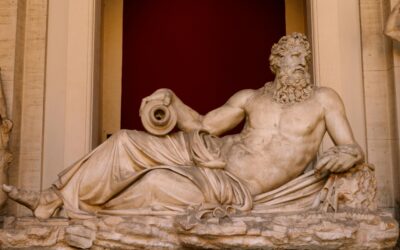
Introduction On mountains crowned with clouds and in temples of marble and flame, the Greek gods once walked as kings and queens of a divine order. They were gods of sky and sea, of war and wisdom, of music and mystery — beings whose passions mirrored those of...
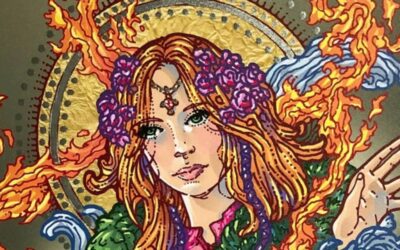
Introduction In the misty lands where forests stretched unbroken and rivers carved their silver paths, the Celtic gods reigned as guardians of nature, craft, and destiny. They were not distant deities but living presences in the wind, the fire, the soil, and the...
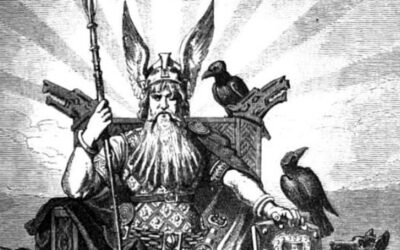
Introduction In the frozen north, where mountains pierce the sky and seas crash with relentless force, the Norse gods once ruled with thunder and fire. They were gods of battle and wisdom, of fertility and fate, shaping the lives of their people with both fury and...

Confucianism is a philosophical and ethical system based on the teachings of Confucius, a Chinese philosopher, that emphasizes moral conduct, social harmony, and respect for traditions. It is not considered a religion in the traditional sense, but it deeply influences...

Taoism is a spiritual and philosophical tradition that originated in ancient China, focused on living in harmony with the Tao (the Way), the underlying force of the universe. Taoism emphasizes simplicity, naturalness, and non-action (Wu Wei) in daily life. Key Beliefs...

Here's what happens after death according to each of the world's major religions and philosophical views, including Atheism, Buddhism, Christianity, Druze, Hinduism, Islam, Jehovah's Witnesses, Judaism, Sikhism, and various Philosophical...